A Saint Who Could Not Stay Still
St. Anthony Mary Claret was a man of prayer, courage, mission, books, education, and service. He began life among looms in Spain, but God led him to become a tireless missionary, a bishop, a founder, and a saint for the whole Church.
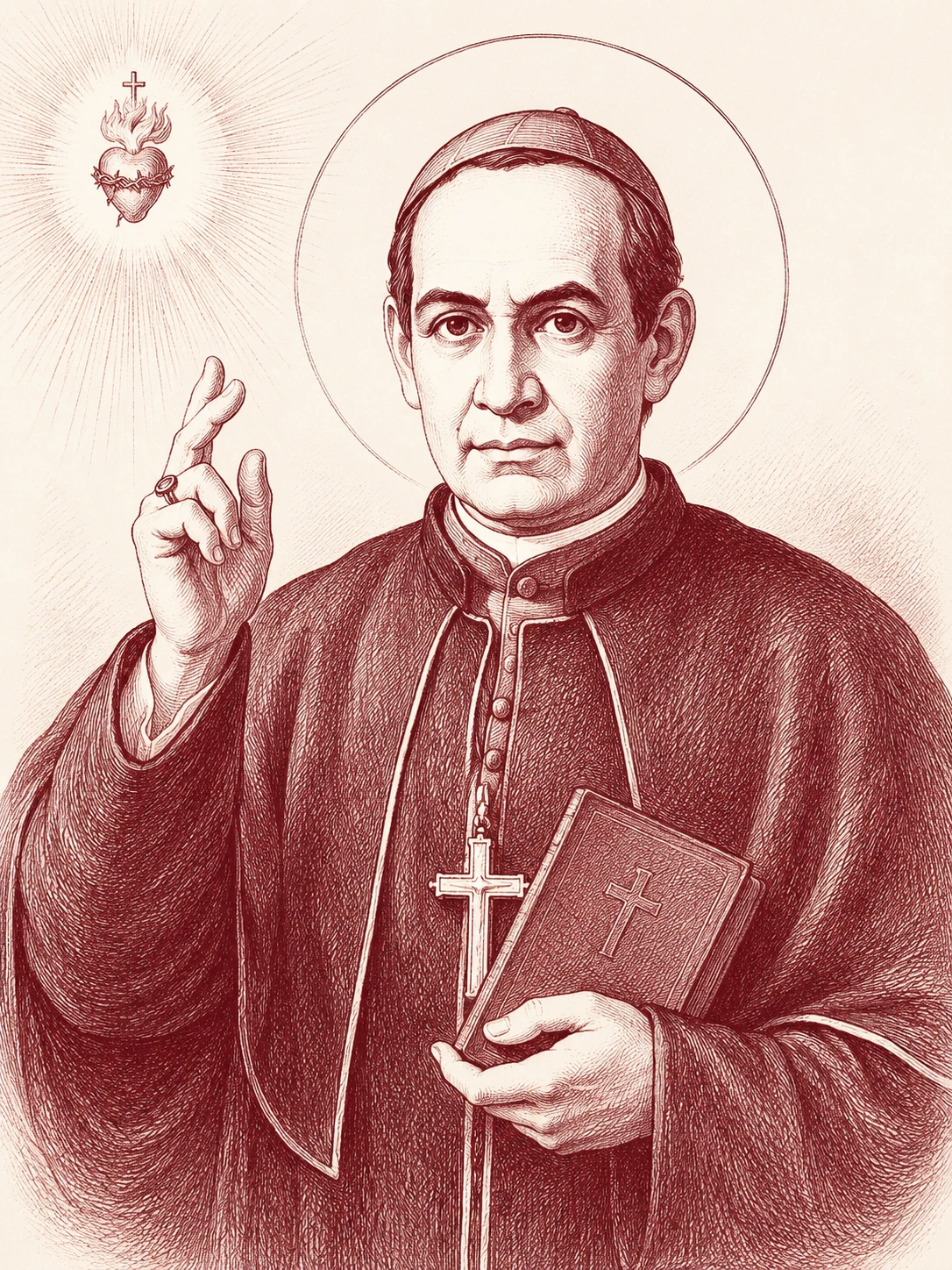
St. Anthony Mary Claret
Missionary, Archbishop, writer, reformer, and servant of the poor.
Childhood Among Looms
1807 — Sallent, Catalonia, SpainAnthony Mary Claret was born on December 23, 1807, in Sallent, near Barcelona, Spain. His full name was Antonio Juan Adjutor Claret Clará. He was born into a deeply Christian family connected with textile manufacturing. The sound of looms, the discipline of work, and the faith of his home shaped his early life.
As a child, Anthony was sensitive, prayerful, and thoughtful. He loved Jesus in the Eucharist and had a deep devotion to the Blessed Virgin Mary. He was also moved by the sufferings of others. Even as a little boy, he thought seriously about life, death, and eternity.
His childhood was not easy. Spain was troubled by war and insecurity. But these hard times did not make him bitter. They made him strong, serious, and ready for sacrifice.
The Call of God
From career success to religious vocationAnthony was talented in the textile trade. As a young man, he went to Barcelona to improve his skills and build a future. He was intelligent, hardworking, and disciplined. By human standards, he could have become very successful.
But success did not satisfy his heart. He faced deep inner struggles, temptations, disappointments, and moments that made him think seriously about his soul. One Gospel question touched him deeply: what is the use of gaining the whole world if one loses one’s soul?
That question changed the direction of his life. He left behind the dream of worldly success and chose the way of God. He entered the seminary at Vic and was ordained a priest in 1835.
The Walking Missionary
Preaching with simplicity and fireAfter becoming a priest, Claret felt a strong call to preach the Gospel. He did not want a comfortable life. He walked from town to town, preaching missions, hearing confessions, teaching the faith, and helping people return to God.
His preaching was simple, direct, and full of fire. He wanted people to know God, love God, and change their lives. He was not interested in fame or money. He wanted only to bring souls closer to Christ.
When political trouble made preaching difficult in Catalonia, he was sent to the Canary Islands. There too, people came in large numbers to listen to him. They lovingly called him “el Padrito,” meaning “the little father.”
Founder of the Claretians
July 16, 1849 — Vic, SpainOn July 16, 1849, in a small room of the seminary of Vic, Claret founded the Congregation of the Missionary Sons of the Immaculate Heart of Mary, known today as the Claretian Missionaries. He began with five young priests who shared his missionary spirit.
The beginning was very humble. There was no grand building, no wealth, and no big crowd. But there was fire. There was a desire to preach the Gospel, serve the Church, and reach people through every possible good means.
Only a few weeks after founding the Congregation, Claret learned that he had been appointed Archbishop of Santiago de Cuba. He accepted it out of obedience, though his heart remained missionary.
Archbishop and Servant in Cuba
1850 — Santiago de CubaClaret was consecrated bishop on October 6, 1850, and went to Santiago de Cuba. The situation there was painful. There were serious social problems, injustice, slavery, weak family life, and a great need for renewal in Christian living.
He did not behave like a distant official. He acted like a shepherd. He travelled through his large diocese, preached missions, cared for the poor, renewed the clergy, promoted education, supported welfare institutions, and worked for human dignity.
He encouraged schools, libraries, farm education, savings for the poor, and practical social works. He also worked with Mother Antonia Paris in founding the Sisters of Mary Immaculate, also known as the Claretian Missionary Sisters.
His work created enemies. He faced slander, opposition, and even violence. On February 1, 1856, he was attacked in Holguin and badly wounded. Yet he forgave and continued his mission.
Royal Confessor, Poor Man at Heart
1857 — Madrid, SpainIn 1857, Queen Isabella II chose Claret as her confessor. This brought him to Madrid and placed him close to the royal court. But Claret never became a man of luxury. He lived simply, prayed deeply, and continued to preach, write, visit hospitals and prisons, and serve people.
He used his position not for personal gain, but for the Gospel. He wrote and spread good books, encouraged Christian culture, and helped people grow in faith. His heart remained with ordinary people, the poor, the sick, and those who needed spiritual help.
He suffered much because of criticism, suspicion, and slander. Still, he tried to stay faithful to God and to the mission entrusted to him.
Exile, Vatican I, and Final Days
1869–1870 — Rome and FranceAfter the revolution of 1868, Claret left Spain with the royal family. Even in exile, he continued his ministry among Spanish immigrants, the poor, and those who needed spiritual support.
In 1869, he went to Rome for the First Vatican Council. His health was weak, but his faith remained strong. After the Council sessions, he moved to France. Because enemies were still trying to arrest him, he took refuge in the Cistercian monastery of Fontfroide near Narbonne.
There, hidden and surrounded by the care of the monks and some of his missionaries, St. Anthony Mary Claret died peacefully on October 24, 1870, at the age of sixty-two.
Life Timeline
A simple timeline to understand the main stages of St. Anthony Mary Claret’s life.
Born in Sallent
Anthony Mary Claret was born in Sallent, near Barcelona, Spain, into a Christian textile family.
Moved to Barcelona
He went to Barcelona to grow in the textile trade, but God slowly turned his heart toward a higher calling.
Ordained Priest
He was ordained a priest and began a life of preaching, prayer, and pastoral service.
Missionary in the Canary Islands
He preached with great zeal and became loved by the people as “el Padrito.”
Founded the Claretians
On July 16, he founded the Missionary Sons of the Immaculate Heart of Mary in Vic, Spain.
Consecrated Archbishop
He was consecrated bishop and later served as Archbishop of Santiago de Cuba.
Wounded in Holguin
He was attacked because of his mission, but he continued serving with courage and forgiveness.
Royal Confessor
He was called to Madrid as confessor to Queen Isabella II, but continued living simply and serving actively.
Died at Fontfroide
He died in France on October 24, 1870, after a life spent for God and people.
Canonized Saint
Pope Pius XII canonized him on May 7, 1950.
What We Learn From Him
His life is not only history. It teaches students and families how to live with purpose.
Prayer
Claret’s strength came from deep friendship with Jesus and devotion to Mary.
Zeal
He worked tirelessly because he believed every soul mattered to God.
Education
He used preaching, books, schools, and libraries to form minds and hearts.
Service
He cared for the poor, the wounded, the neglected, and those without support.
Why Claret Matters to Our School
Claret School carries his name because his life speaks directly to education. He believed that faith should form the whole person. He worked for children, families, the poor, and society. He saw books, schools, preaching, and practical service as ways to bring light.
For our students, St. Anthony Mary Claret is a model of hard work, prayer, courage, simplicity, and service. His life tells every child: do not live only for yourself. Use your gifts to bring light to others.
Let your light shine.
The best way to honour St. Anthony Mary Claret is to live with faith, courage, love, and service.
Claret School
Sahanagar, Burdwan, WB 713146
+91 9475976064